Warredi Enisuoh
In response to the persistent threat of insecurity across the nation, Nigeria must urgently overhaul its educational syllabus to integrate security awareness from basic school levels, alongside deploying advanced facial recognition technology and long-range thermal drones to protect its vulnerable supply chains.
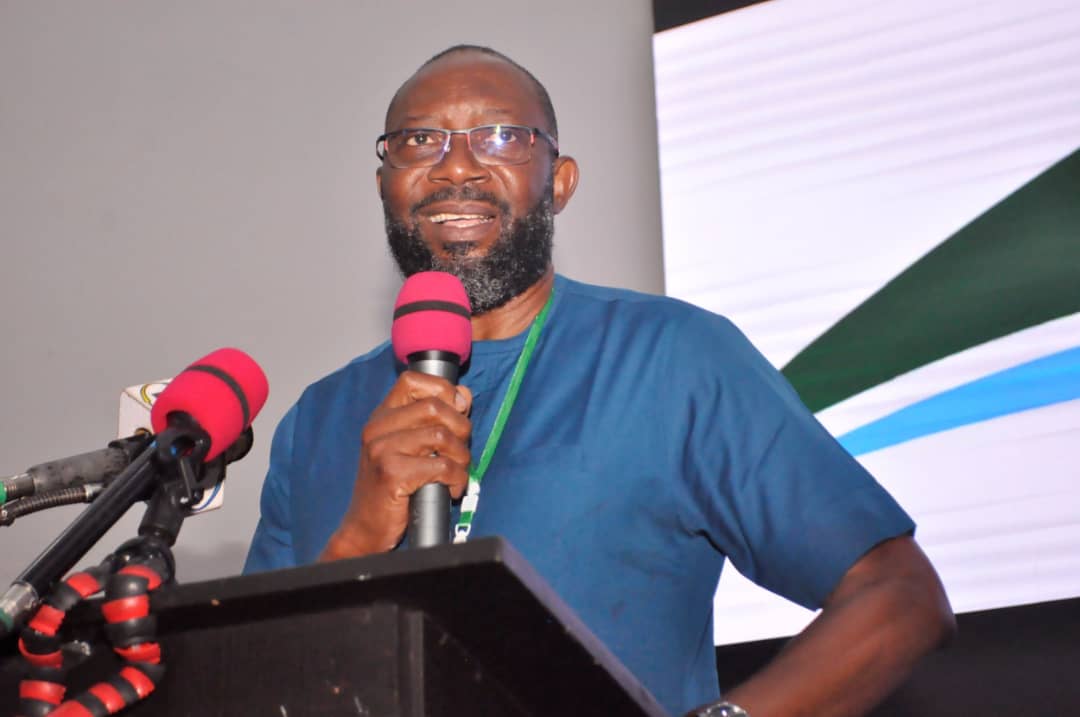
This call was made on Friday, by Warredi Enisuoh, Executive Director of Operations and Technical at Tantita Security Services Nigeria Limited, while speaking to journalists on the sidelines of the 2nd Nigeria Transport Summit held at the Providence Hotel in GRA, Ikeja, Lagos.
Addressing the summit’s theme, ‘Navigating Global Disruptions and the Road Ahead: Mobility, Energy and Trade Facilitation for a Resilient Future,’ the seasoned airline captain, ship master, and maritime security expert emphasized that criminal elements systematically exploit public unawareness and outdated infrastructure.
Enisuoh warned that the nation can no longer afford a reactive approach to security threats, noting that widespread indifference exposes citizens to preventable dangers.
“When it comes to security, the problem is people have to be aware. It is awareness or unawareness that your assailants take advantage of,” Enisuoh stated. “If people know that you are aware, it helps douse down the insecurity because those who carry out threats always take advantage of the fact that you are not aware. So awareness is key.”
He stressed that the reality of kidnapping and security risks must be directly countered through early childhood and adolescent education.
“The amount of insecurity that has somehow inflicted this country is not reflected in the day-to-day education of our children in school. We should start teaching insecurity in school now,” Enisuoh asserted.
“Because those who will be kidnapped tomorrow are free today. Everybody seems to feel it’s not their business or ‘not my portion,’ but the person who was taken yesterday felt the same way. We have to increase our educational syllabus to handle insecurity lectures because this is something that has come to stay.”
Critiquing Nigeria’s current transport and logistics infrastructure, Enisuoh noted that the nation’s sea ports and highways were never structurally designed to withstand or mitigate modern security risks.
Comparing sector performances, he pointed out that Nigeria’s aviation industry has performed remarkably well due to stringent international auditing, perimeter fencing, and strict access controls, adding that the maritime domain has much to learn from airport security frameworks.
To bridge these gaps, Enisuoh highlighted the necessity of smart technology and infrastructure redesigns:
Modern ports must eliminate human manual checks in favor of AI-powered command centers.
Enisuoh revealed that his team is currently designing an advanced security network for Delta State that uses facial recognition cameras capable of tracking individuals across different servers and locations.
“In places like the Port of Los Angeles, there is zero human intervention. Containers are stacked using GPS, and drivers are identified by facial recognition systems as they drive through the gates. That level of automation eliminates security vulnerabilities.”
He advocated for building deeper, consolidated sea ports that accommodate fewer, larger vessels rather than managing hundreds of small ships in shallow waters. “If your port is deeper, you can focus on monitoring ten big ships easily, rather than being distracted by a hundred smaller vessels operating in a shallow environment.”
Enisuoh explained that key transportation corridors, such as the volatile East-West Road, can be fully secured through coordinated drone patrols equipped with body-heat sensors. “We have drones that detect body heat. You cannot take anybody into the bush without us seeing you—it’s impossible. We will see your body heat and grab you. If every state patrols its section using drones, we secure both human lives and the movement of commercial goods.”
Global Pressure, Vessel Seizures, and Marine Wealth Diversification
Touching on energy security, Enisuoh revealed that geopolitiycal tensions in the Middle East—specifically disruptions around the Strait of Hormuz—have drastically increased international pressure on Nigeria’s crude oil reserves, drawing foreign criminal elements into Nigerian waters.
He disclosed that Tantita Security Services, in collaboration with national security forces, intercepted and arrested two foreign vessels attempting to steal crude oil within a 48-hour window leading up to the summit.
To counter this surge, Tantita has deployed long-range surveillance drones capable of conducting non-stop maritime patrols spanning from Warri all the way to the Ghanaian border.
Concluding his remarks, Enisuoh urged the Federal Government to secure its territorial waters against the illegal exploitation of fisheries and to rapidly commercialize solid minerals to diversify the economy away from petroleum reliance.
“A lot of ships are coming into Nigeria with the intention to steal, but we are expanding our coverage,” Enisuoh said.
“We must protect our waters, not just for crude oil, but also for our marine life. Most of the fish sold in Lagos markets as ‘imported’ was actually caught right inside our ocean and sold back to us. Beyond oil, Nigeria is immensely rich in solid minerals.
“Once we regulate and explore these minerals properly, national wealth will increase, public services will improve, and people will naturally shift their focus away from oil theft.”