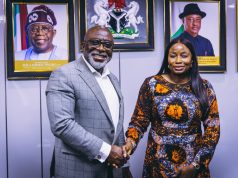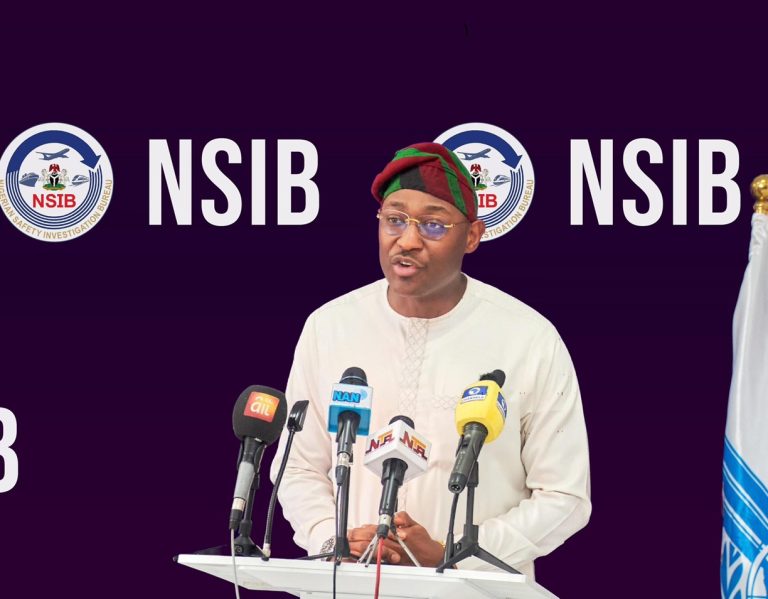
Capt. Alex Badeh Jnr, DG, NSIB
The Nigerian Safety Investigation Bureau (NSIB) has emphasized the need for prompt remittance of levies from other agencies to support government funding, enabling the Bureau to effectively prevent accidents in all transportation sectors.
According to NSIB Director General, Capt. Alex Badeh Jnr., the Bureau’s expanded role in investigating air, rail, and maritime accidents requires increased funding and cooperation from relevant sectors.
The NSIB DG made this known during a virtual media chat, where he highlighted the importance of collaboration, stating that the NSIB is working with the International Maritime Organisation (IMO) to streamline the investigation process for maritime accidents.
He noted that the Bureau would prefer to acquire its own equipment but is limited by funds. “We are planning to procure equipment but to get the money, we are working on it. We can’t depend on aviation alone.”
Badeh Jnr. lamented the bureaucracy impeding the flow of information among agencies, citing a lack of communication between Nigeria Maritime Administration and Safety Agency (NIMASA) and NSIB.
He emphasized the need for cooperation, stating, “We work for Nigeria, we should work together.”
The NSIB DG also disclosed that the Bureau is working to address personnel shortages, with plans to second personnel from NIWA and NIMASA and train them.
“It’s just very hard to get experienced people in maritime, we struggle to get that the talents, it’s a work in progress, we are going to get some people seconded from NIWA and.Nimasa, we are going to train them. We have a couple of people coming on board by September , we are also looking for retired personnel”, he stated
The NSIB czar expressed the need for increased funding, stating that accident investigation agencies worldwide typically have a standing budget, noting that the Bureau would explore all options, including seeking more funding from the Federal Government.
“On the money with NIMASA, we are still engaging them and the National Assembly to get solution to the issue. As for the National Inland Waterways Authority, we don’t draw any money from them, but we will explore all options, including with Federal government. Typically all over the world, accident investigation agencies are not left to do cost recovery from regulators; there is usually a standing budget.
“There should be no question because we are here to prevent accidents, and when they happen, we should be able to go out with full force to prevent reoccurrence, therefore, I will be looking to go back to government for more funding”, he said.
While dissecting the regulatory drafts for all the sectors, Calt. Badeh Jnr disclosed that the investigation of maritime accidents has now been ceded to the Bureau, adding that the International Maritime Organisation (IMO) had allowed the Nigeria Maritime Administration and Safety Agency (NIMASA) carry out accident investigation before now because of absence of an independent investigation body.
“Yes, IMO recognised NIMASA as the sole regulator because there was a vacuum, just like the Nigeria Civil Aviation Authority was recognised as the investigator by IMO because it was the only one doing that, but with the passing of our 2022 Act, that gave us the power to investigate other modes of transportation. At the time, IMO preferred to have an independent body for investigation because the best practices all over the word is they usually have independent bodies outside of the regulator, we didn’t just do this, we worked with the IMO to do this and once it is streamlined, there will be more information and the current status of NSIB will be reflected as the sole investigator for Maritime accidents in Nigeria.”, he added.
The NSIB chief said the Maritime regulatory draft was put together in consultation with he IMO.
“Whatever you have in the draft is an IMO procedure, we follow IMO procedures, for instance, on the stare of occurence matter, it’s basically from IMO , it’s a bit different from aviation but geographically, if it’s convince for us as a state of occurence, why not, we can do it, it’s a little different from aviation.”, he added.
The NSIB is now fully empowered by law to carry out accident investigations in all transportation sectors, and the Bureau is poised to make a significant impact on safety in Nigeria. With cooperation and adequate funding, the NSIB can effectively investigate accidents and work towards preventing them.