Posted by Sade Williams
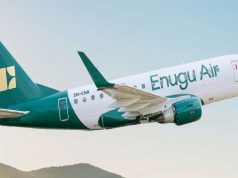
As airlines globally continue to seek ways to reduce cost and at the same time, maintain high safety standards, Africa and indeed, Nigerian airlines are not left out in this quest.
To this end, giant plane maker, Airbus has strongly advocated switching to newer aircraft from older ones as the quickest way to reduce cost and save on earnings.
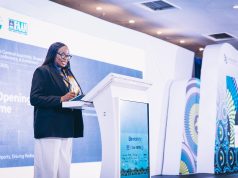
Joep Ellers, airline marketing director, Airbus, during a media briefing ahead of the 7th Aviation Africa Summit and Exhibition which held recently at the International Convention Centre, Abuja, linked fuel consumption, carbon emission, maintenance cost reduction to using modern equipment.
According to him, the aerodynamics of new generation aircraft are now better with latest engine and superior cabin design, presenting a comforting and soothing travel experience.
He noted that currently in Nigeria, 75 percent of aircraft in operations are old generation aircraft while the remaining 25 percent are new generation aircraft while in Africa 78 percent of aircraft flying are new generation aircraft.
“One quick way to reduce fuel consumption is to switch to new generation aircraft. And another good news is that by 2030, all Airbus aircraft will be able to use sustainable fuel”, he said.
The Airbus Global Market Forecast predicts that passenger traffic to, from and within Africa will increase by 4.1% yearly over the next twenty years, with demand driven by urbanisation, trade and tourism. It predicted that itcould rise even faster if the Single Africa Air Transport Market (SAATM) is fully implemented across the continent. Conservatively speaking, African carriers will need at least 160 new passenger and freighter aircraft to meet the rising demand by 2042.
”African carriers are increasingly aware of the operational and economic benefits of acquiring new and modern aircraft. In fact, today airlines on the continent operate some of the most efficient and technologically advanced aircraft such as the A350XWB, A330neo, A320neo and the A220. Africa’s Airbus operators include customers such as Ethiopian Airlines, Rwandair, Air Senegal, South African Airways, Air Côte d’Ivoire, EgyptAir and more.
A major customer of Airbus in Nigeria, Ibom Air which ordered for 10 new A220-300s from Airbus, with deliveries starting in November 2023, said the results delivered by the airline so far validate the painstaking, careful planning and thorough execution of Ibom Air’s business plan by its management.
Mr. George Uriesi, Chief Operating Officer of the airline, while announcing its vision to be a world-class and African regional airline. noted that by early 2021, Ibom Air, established in 2010, began to experience severe capacity constraints, leading it to settling for the Airbus A220.
”The burgeoning strength of the brand based on wide acceptance in the market created a serious capacity
crunch in H1 2021. It became apparent that an increase in capacity to meet demand had become necessary. As a result, we approached aircraft manufacturers seeking for larger capacity
aircraft, eventually settling on the Airbus A220. However, because it would require a long lead time to make orders
and schedule deliveries, with the help of Airbus we secured 2 A220- 300s on an initial one year ‘wet-lease’ from Egyptair, which we began to operate on 30 June, 2021 (bringing our fleet to 7 aircraft). This gave us the opportunity to ‘test’ the aircraft and we were delighted that the A220 was very well received and achieved great success for
us in the Nigerian market.”, he said
Enters modern technology
A330 Family
This is most popular widebody family ever . It dominates the widebody short to medium haul market, flying efficiently on routes from 20 mn to over 17 hours due to weight variants.
The A330neo offers operating costs reduction by leveraging A350s new generation technology. It is the newest experience in the quietest cabin in its category. With 1,809 orders (including 323 A330neo, Freighters, MRTT) orders from more than 130 customers and 1,577 deliveries (including 107 A330neo) to more than 140 operators,
it has 232 A330 (17 A330 and 215 A330neo) backlog and more than 1,300 A330s sold since B787 launch.
The A330-200 variant has a range of up to 7,250 nautical miles, seating from 210 to 250 passengers while the A330-300 has a range of up to 6,350nm seating 250 to 290 passengers, offering lower operating cost.
The A330-200F is a mid-size freighter, offering up to 70 tons of payload with a range up to 4,100 nm and up to 35% lower operating costs per tonne compared to larger freighters.
The A330neo, with two sizes (A330-800 and A330-900), is a new aircraft built on A330 proven values, offering airlines lower operating costs by leveraging A350’s new generation technology. And with new generation
engine RR Trent 7000, the A330neo burns 25% less fuel per seat or 14% less fuel per seat vs A330-200 and A330-300.
It is a rue new generation aircraft, powered by new generation Rolls-Royce Trent 7000 engine, with new pylon and new nacelle producing significant reductions in fuel burn. It features new wing – extended wingspan to 64m, state-of-the-art aerodynamics, new full composite winglet and new systems , with latest technology A350 cockpit functionalities on board, including WI-FI Tablet, Electronic Flight Bag, Dual head-up display and Runway Overrun Prevention.
The A330neo benefits from Airbus commonality concept, providing significant operating costs reductions for airlines and seamless integration into existing Airbus fleets.
The A330-800 is the newest, most efficient longest range entry-level widebody and is based on the A330-200, having the largest operator base of any widebody aircraft. Meanwhile, the A330-900 is the newest, lowest seat mile cost mid-size widebody and is part of the most operated widebody family ever, consolidating A330 family position in the 300-seater category. The A330neo provides a number of advantages over the B787, including more seats and flexibility in Y/C seating arrangements, lower fuel burn per seat, and quieter cabins.
The A220 Family
This comprises the A220-100 and the A220-300, and is the mist the most efficient small single-aisle aircraft with a clean sheet design and the only aircraft purpose-built for the 100 to 150 seat market segment – offering up to 1,100nm more range. With its state-of-the-art aerodynamics, advanced materials and latest-generation technologies and engines, the A220 is perfectly sized for this market and with a range
of up to 3,450nm.
The A220 offers superior single-aisle comfort: widest seats, largest windows and 20% more overhead stowage space per passenger , providing flexibility for operators to right-size their operations. It is the ideal complement to the A320 family and the latest addition to Airbus leading Single-Aisle family.
With 806 historical orders from around 30 customers and 283 aircraft delivered to 18 operators (SWISS, airBaltic, Korean Air, Delta Air Lines, Air Tanzania, EgyptAir, Air Canada, JetBlue, Air Manas, Ibom Air, Air Austral, Air
France, Iraqi Airways, Breeze Airways, Air Senegal, ITA Airways, Bulgaria Air and Cyprus Airways), there are 523 in backlog at the end of August 2023, 53 deliveries in 2022; 37 deliveries so far in 202
The A220 features a low drag nose and tailcone design, the smallest fuselage wetted area and optimised wing aerodynamics. The A220 is powered by two Pratt & Whitney PW1500 GTFTM latest generation engines (geared turbofans), belonging to the same engine family as the Pratt &Whitney PurePower, altogether, this translates into unbeatable fuel efficiency: 25 percent less fuel burn per seat vs. previous generation a/c, and 25 percent cost advantage per seat vs. previous generation a/c
As a result of its optimised maintenance programme, advanced systems integration and high-technology engine design, the A220 has longer maintenance intervals: 850 hours for “A” checks and 8,500 hours for “C” checks.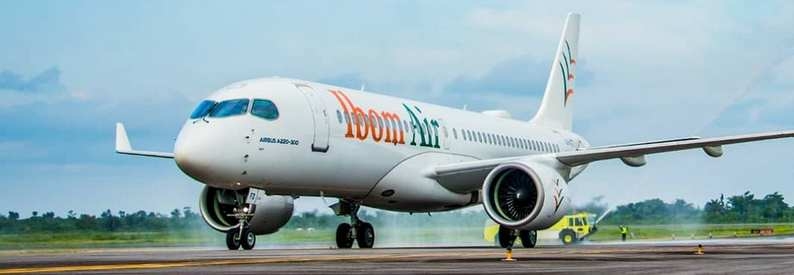
The A350 family
The A350 Family is the world’s most modern and efficient wide-body family, offering operational flexibility and efficiency for all market segments from ultra-long haul to short-haul distance up to 9,700 m.
The A350’s clean sheet design includes state-of-the-art technologies and aerodynamics delivering unmatched standards of efficiency and comfort. The A350’s “Airspace” cabin is the quietest of any twin-aisle and offers passengers and crew the most modern in-flight products for the most comfortable flying.
It is the only all-new design aircraft in the 300-410 seater category and combines the very latest aerodynamics, new generation engines and use of lightweight materials, bringing a 25% advantage in fuel burn, operating costs
and carbon dioxide (CO2) emissions compared to previous generation competitor aircraft. With a state-of-the-art aerodynamics, including unique wing morphing technology , it continuously optimises the wing profile to reduce drag and lower fuel burn. Powered by new Rolls-Royce Trent XWB engines, it is the world’s most efficient large
aero engine flying today while over 70% of the airframe is made from advanced materials, including: 53% composites; titanium (substitute for steel) and modern aluminium alloys.
The A350 Family offers eco-efficient and sustainable design, reducing the environmental impact from gate to gate through its quietest in class with 50% noise footprint reduction, 25% less CO2 emissions per seat, and 31% NOx (Nitrogen (di)Oxide) emissions. The A350-900 offers 300-350 seats in a typical 3-class configuration, while the A350-1000 offers 350-410 seats with the same comfort and 40% more premium area. The A350 features a 221-inch wide cabin, 6″ wider than 787, offering passengers absolute comfort and flexibility for airlines in accommodating all types of configurations.
The A320 Family
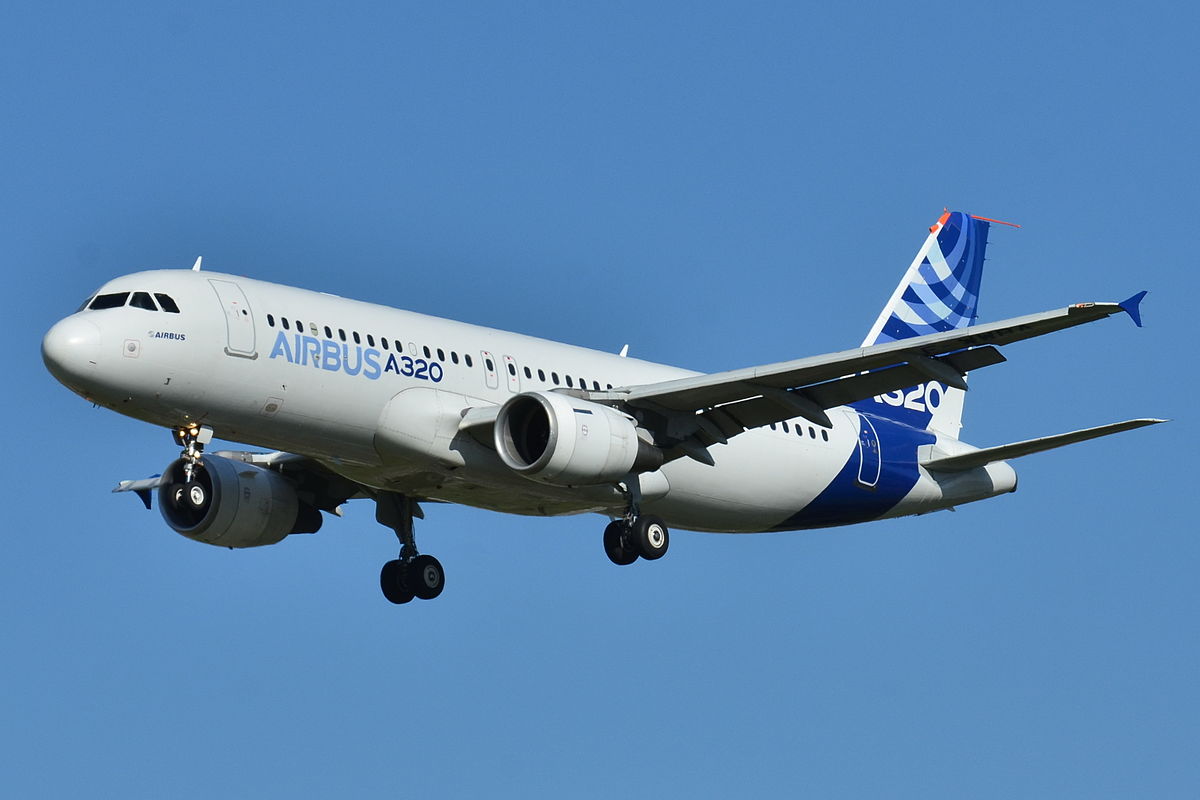
The A320 family is in in three sizes (A319, A320 & A321), and it is the world’s most popular single-aisle aircraft family and the preferred choice with airlines, from the low cost carriers to new business models taking benefits of new levels of performance and comfort. The A320 Family offers the widest single-aisle cabin in the sky from 120 up to 244 seats. The A320 Family allows operators to match the right aircraft size to demand covering the entire market, from low-to-high-density routes to longer-range thin routes. It is the only aircraft family that offers containerized cargo, as an option, increasing the airlines’ operational efficiency. Due to the widest single-aisle cross section of the single-aisle market, the A320 Family provides a unique flexibility to operators who can choose among bulk or container capability.
With 17,824 A320 Family orders from over 300 customers, including 9,704 A320neo Family orders for 137 customers, already, there are 11,039 deliveries including 2,939 A320neo Family deliveries and 6,785 in backlog.
The aircraft has over 307 million flight hours / over 167 million flight cycles since entry into service with 99.7 percent Operational Reliability in the last 12 months. The A320 Family production is progressing well towards the previously announced rate of 75 aircraft per month in 2026. The production increase will benefit the entire global industrial value-chain.
The A320 Family has four final assembly lines located in Toulouse, France, Hamburg, Germany, Tianjin, China, and Mobile, USA, with the production increase benefiting the entire global industrial value-chain by increasing capacity at existing industrial sites and investing to ensure that all A320 Family commercial aircraft assembly sites are A321-capable.
ith 20 million tons of CO2 savings since the A320neo Family entry into service in 2016, incorporating Sharklets, new fuel-efficient engines, and latest cabin innovations. It offers a 20% lower fuel burn and CO2 emissions, a 50% noise footprint reduction, 5% lower airframe maintenance cost, and a 14% lower cash operating costs per seat. The highly sort after aircraft share the same fly-by-wire digital flight controls and cabin management systems, offering reduced pilot training and scheduling costs and lower operations and maintenance costs.
It also has two new engine options from Pratt & Whitney and CFM International, with Skywise being a key pillar for continuous improvements relating to the capability to extract data from the aircraft and making it valuable for operators, with the compatibility of Skywise with the A320 Family aircraft, particularly for the operations and maintenance of their fleet.