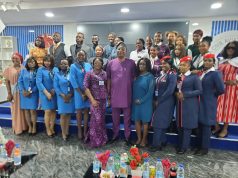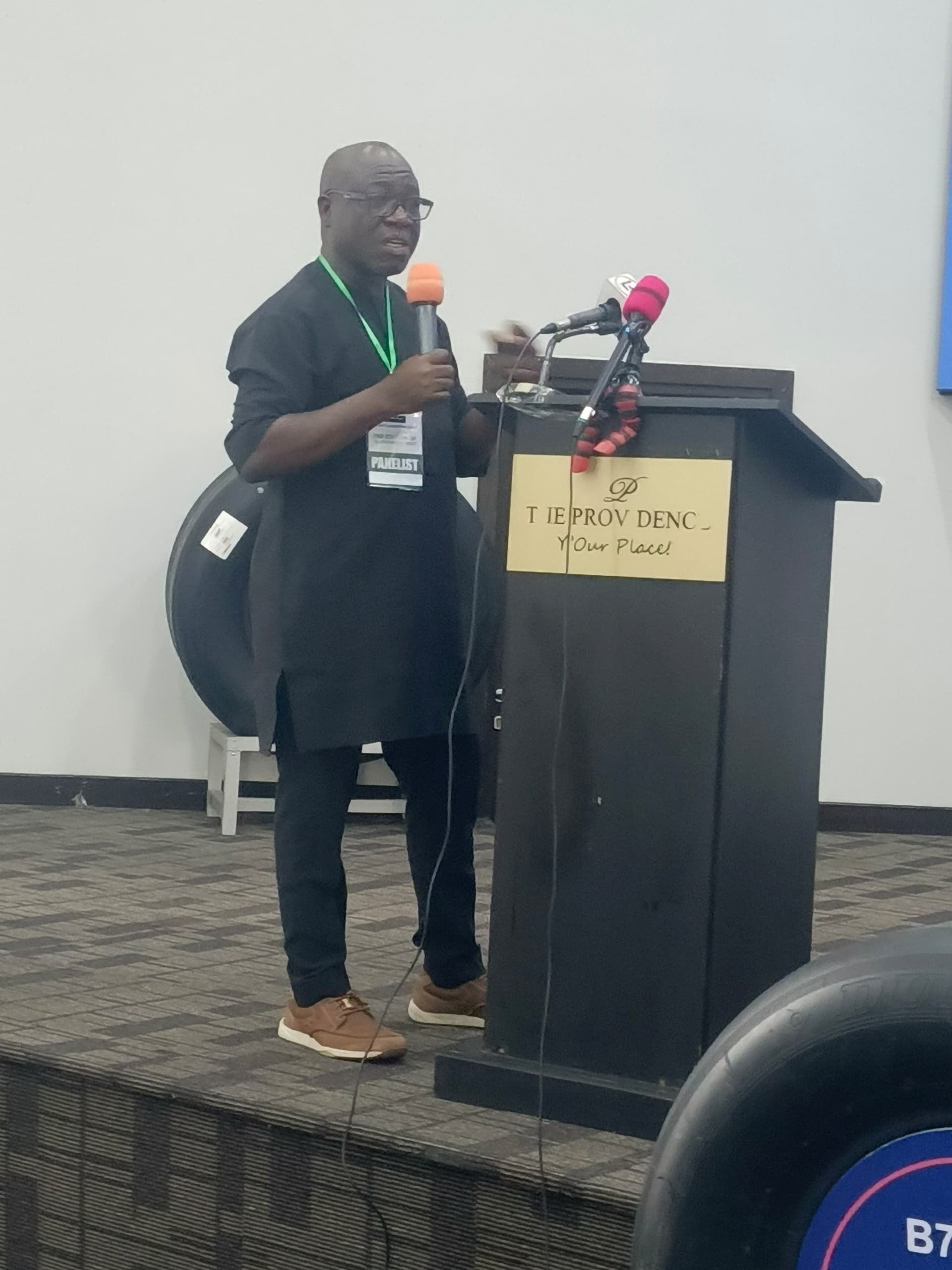
Dr Femi Ola Aiyegbajeje
A transport and logistics expert, Dr Femi Ola Aiyegbajeje, has called for a fundamental shift in Nigeria’s transport infrastructure planning, urging the Federal Government to adopt a rail-led multimodal integration strategy that connects seaports, railway corridors, roads, inland terminals, production centres and markets within a coordinated logistics system.
Aiyegbajeje, of the Department of Geography and Planning, Faculty of Social Sciences, University of Lagos, said Nigeria could unlock greater economic value from its transport investments by moving away from an infrastructure-first approach towards an integrated logistics service model driven by cargo demand, operational reliability and measurable performance outcomes.
In his presentation titled “Rail-Led Multimodal Integration: Unlocking Efficient Transport, Trade Facilitation and National Connectivity,” he emphasised that railway infrastructure could deliver its full economic potential only when it functioned as part of an end-to-end freight transportation chain.
“Rail creates national value when it works as part of an end-to-end logistics chain—not as an isolated asset,” he stated.
He argued that integrating rail with ports, road networks, inland logistics hubs, agricultural production zones, industrial centres and digital information systems was critical to improving freight movement, facilitating trade and strengthening national connectivity.
According to him, Nigeria’s economic activities are distributed across coastal gateways, inland production areas and major consumption markets, making coordinated transportation systems essential for efficient cargo evacuation and distribution.
He noted that a seaport could experience operational bottlenecks when cargo evacuation became slow or unpredictable, while railway infrastructure could underperform when terminal facilities, train schedules and customer access were poorly coordinated.
“Transport performance depends on the whole shipment journey—not one mode or asset,” he explained, stressing that the efficiency of the logistics chain should be assessed from the point of production to final delivery.
Rail as the backbone of freight logistics
The renowned transport expert proposed a complementary division of responsibilities among the different modes of transportation, with rail serving as the principal mode for suitable high-volume freight moving over medium and long distances.
Under the proposed model, road transportation would provide flexible cargo collection, distribution and first- and last-mile connectivity, while maritime transport would support international trade and large-scale cargo movement through seaports. Air transport, meanwhile, would remain important for urgent, time-sensitive and high-value consignments.
He stressed that the objective was not to replace road, maritime or air transportation with rail, but to establish an efficient combination of modes based on distance, cargo volume, commodity characteristics, urgency, terminal accessibility and total logistics cost.
“Rail should be the backbone where it is competitive—while road, maritime and air retain complementary roles,” he said.
Aiyegbajeje maintained that policymakers and transport operators must assess the full door-to-door cost of moving cargo rather than compare railway tariffs with road haulage charges in isolation.
He identified lower overall logistics costs, improved port evacuation, stronger links between production centres and markets, expanded regional access, enhanced transport resilience and potentially improved environmental performance as benefits Nigeria could achieve.
However, he cautioned that these benefits would depend on reliable railway operations, adequate cargo volumes, efficient terminal access, high asset utilisation and sustained customer demand.
Five dimensions of integration
Aiyegbajeje outlined five essential dimensions of multimodal integration: physical, operational, institutional, commercial and digital connectivity.
Physical integration, he said, would require railway sidings, freight yards, cranes, warehouses, road access and safe cargo-transfer facilities capable of supporting efficient movement between transportation modes.
Operational integration would involve synchronising train schedules with vessel arrivals, port gate operations, customs procedures and final delivery arrangements to minimise delays and missed connections.
On institutional integration, he called for clear responsibilities among railway authorities, port operators, customs agencies, security organisations and private logistics companies.
Commercial integration, he explained, would require transparent tariffs, clearly defined service contracts, cargo liability arrangements and minimum freight-volume commitments to improve predictability for operators and customers.
Digital integration would involve shared shipment references, cargo tracking, electronic documentation, milestone reporting and systems for identifying and resolving operational disruptions.
He warned that weaknesses at any point in the logistics chain could undermine efficiency gains achieved elsewhere.
“A break at any interface can erase the gains made elsewhere in the chain,” he stated, underscoring the importance of coordinated planning and execution across transport agencies and private-sector operators.
Apapa–Moniya/Ibadan corridor identified for pilot assessment
As part of a practical implementation strategy, the expert proposed evaluating the Apapa–Moniya/Ibadan freight connection as a potential end-to-end logistics pilot.
The proposed corridor would connect port cargo release and loading arrangements with railway terminal operations, scheduled rail transportation, inland cargo handling and final road delivery.
Under the model, port operators would coordinate cargo release and gate access, while railway terminals would manage container handling, yard planning and train formation. Published timetables and cargo-tracking systems would support predictable rail transit, with inland hubs providing storage, consolidation and authorised customs services before road transport completes delivery.
Aiyegbajeje referenced the Nigerian Railway Corporation’s February 2025 announcement involving APM Terminals Apapa on cargo freight services as an indication of the opportunity for developing such connections.
He cautioned, however, that the announcement should not be interpreted as evidence of current freight throughput or demonstrated service reliability.
He advocated an evidence-based assessment of cargo origins and destinations, committed shipper volumes, terminal accessibility, available land and utilities, customs requirements and the potential for loaded return journeys before major investments were undertaken.
Trade facilitation and customs coordination
The presentation also highlighted trade facilitation as a central component of multimodal logistics reform.
Aiyegbajeje said efficient freight movement required more than railway tracks and rolling stock, stressing the importance of pre-arrival cargo information, coordinated inspections, digital documentation and predictable handovers between ports, rail terminals, customs authorities and inland delivery operators.
He called for processes that would enable earlier risk assessment, reduce repeated submission of information and minimise delays caused by fragmented documentation and poorly aligned operating schedules.
He further recommended the publication of service-level standards covering tariffs, cargo cut-off times, liability, complaints and disruption management.
“Logistics performance depends on customs, infrastructure, service quality, tracking and timeliness—not infrastructure alone,” he said.
He maintained that effective trade facilitation must be built into the design and operation of freight corridors rather than treated as a separate administrative responsibility.
Maintenance, reliability and commercial viability
The expert identified infrastructure reliability, commercial viability, fragmented institutional responsibilities, land acquisition and community impacts, data quality and cybersecurity as significant risks that must be addressed.
He noted that the performance of a rail-led freight system would depend on the condition of tracks, signalling equipment, locomotives and wagons, as well as effective maintenance arrangements and operational security.
On commercial viability, he emphasised the need to secure regular cargo flows, anchor customers and adequate freight volumes, taking seasonal variations into account.
He also warned that weak coordination among institutions could result in conflicting schedules, unclear responsibilities and competing operational incentives, while digital integration would require safeguards for confidential information and protection against cyber threats.
Aiyegbajeje therefore urged the authorities to provide funding for the entire lifecycle of railway infrastructure, including maintenance and operating capacity, rather than concentrating public expenditure primarily on construction.
“Fund lifecycle maintenance and operating capacity—not only construction,” he advised.
He argued that the sustainability of railway investments would ultimately depend on the capacity to maintain infrastructure, provide dependable services and attract customers consistently.
Phased implementation and performance accountability
To translate the proposed framework into practice, the expert recommended a phased implementation roadmap beginning with freight-flow analysis and the selection of one or two commercially viable pilot corridors.
The initial six-month phase would involve mapping cargo flows, transport costs, transit times and service variability before identifying corridors supported by credible shipper demand.
Between six and 18 months, stakeholders would develop operational arrangements covering schedules, tariffs, minimum cargo volumes, equipment requirements, liability, documentation and procedures for resolving disruptions.
The subsequent 18-to-36-month phase would focus on expanding services, increasing customer participation and improving terminals and feeder networks, but only after the pilot corridors had demonstrated reliable performance.
National expansion and connections to regional gateways would follow after the model had established measurable operational and commercial value.
He also called for transparent demand studies, cost-benefit analysis, competitive procurement, clear allocation of public-private sector risks, stable maintenance funding and cross-agency coordination.
To strengthen accountability, Aiyegbajeje proposed corridor performance dashboards that would track door-to-door transportation costs, median and 90th-percentile transit times, port dwell time, on-time departures and arrivals, cancellations, missed transfers, train and wagon utilisation, customs clearance duration, cargo damage, safety incidents and emissions.
He said performance assessments should establish corridor-specific baselines, be reported monthly and independently verify claimed savings against a credible alternative, such as road-only transportation.
Set corridor-specific baselines first; report monthly; verify savings against a credible counterfactual,” he recommended.
The approach, he argued, would enable government and operators to distinguish between infrastructure expenditure and actual improvements in freight efficiency, trade performance and public value.
Historical lessons for railway development
The presentation traced Nigeria’s railway development to the late nineteenth and early twentieth centuries, when railway corridors helped reorganise economic activity around coastal ports, agricultural production, mineral resources and inland markets.
It cited the Lagos–Ibadan line, developed between 1898 and 1901, the extension of the northern railway to Kano in 1911, the unification of the Lagos Government Railway and Baro–Kano Railway in 1912, and the construction of the Jebba Bridge in 1915 as milestones in the development of the national railway network.
The Eastern corridor linking Port Harcourt and Enugu supported coal and freight transportation, while subsequent extensions expanded railway access towards the north-east.
However, the presentation noted that ageing infrastructure, maintenance deficiencies, operating constraints and competition from road transportation weakened railway service reliability in subsequent decades.
Contemporary standard-gauge projects, including Abuja–Kaduna, Lagos–Ibadan and Itakpe–Warri, were identified as opportunities for modernising railway services and strengthening freight logistics.
Aiyegbajeje stressed that modernisation must extend beyond track construction to include rolling stock, terminal access, service frequency, safety, maintenance, operational data and commercial partnerships.
Building a performance-driven national logistics network
The expert concluded that Nigeria’s next stage of railway development should prioritise the integration of ports, roads, inland logistics hubs, producers and markets through reliable operations, shared information and accountable institutions.
He urged policymakers to select transport corridors based on credible evidence and shipper demand, coordinate timetables and cargo-handling processes, and measure the overall cost and reliability of freight movement.
“Build the service, not just the railway,” he stated, summarising the central argument of his presentation.
He maintained that a rail-led multimodal system could strengthen Nigeria’s competitiveness, improve trade facilitation and expand access to national and regional markets, provided that infrastructure investments were matched by operational coordination, commercial viability and transparent performance monitoring.