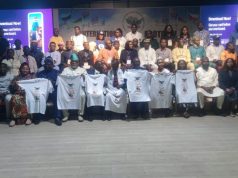
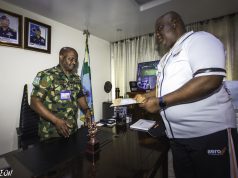
The National Association of Aircraft Pilots and Engineers (NAAPE) has kicked against a bill that is currently before the National Assembly seeking to reduce the Nigeria Civil Aviation Authority’s share of the 5 % Ticket Sales Charge from 56 % to 40 %, while increasing the share of the Nigerian Airspace Management Agency from 22% to 40 %.
The association said the plan should not be viewed as mere routine redistribution of revenue among aviation agencies but a policy decision with potentially serious implications for aviation safety, regulatory independence, and Nigeria’s international standing.
A statement signed by Comrade Diepreye Stephen Saburugha, Chairman, NAAPE, NCAA Branch and Comrade (Engr.) Celestine Nkemakolam Chukwu, Secretary, NCAA Branch, said the lawmakers were approaching the issue from a wrong position, adding that it is troubling to prioritize such argument over safety.
“What makes the present proposal even more disturbing is that this debate is being approached from the wrong direction. A proper historical review of the 5% Ticket Sales Charge reveals that the real issue is not merely the sharing formula, but the original purpose for which the charge was created, the philosophy upon which it was allocated and the persistent failure to ensure full remittance by operators.
“The historical record is clear. The Report of the Implementation Committee on the Establishment of the Nigerian Civil Aviation Authority (NCAA) and the Nigerian Airspace Management Agency (NAMA), published in May 1999 under the chairmanship of Engr. I. Mamman, deliberately established two different funding models for the two organisations. The NCAA was conceived as Nigeria’s independent safety and economic regulator with responsibility for protecting the travelling public through the oversight of the entire civil aviation industry. Because safety oversight is a sovereign responsibility that generates little commercial revenue but demands enormous financial investment, the Committee recognised that the Authority would ordinarily require Government funding. To relieve Government of that burden while guaranteeing the financial autonomy necessary for effective safety oversight, the 5% Ticket Sales Charge and Cargo Sales Charge were introduced as sustainable industry-funded mechanisms for financing the NCAA.”, it said
NAMA, on the other hand, the association said was deliberately conceived as a commercial air navigation service provider that would progressively become self-funding through the statutory charges payable for the air navigation and related services it provides to aircraft operators.
“Indeed, NAMA itself was carved out of the former Federal Airports Authority of Nigeria (FAAN), which previously performed those functions. Today, FAAN remains a self-financing agency and receives no allocation whatsoever from the 5% Ticket Sales Charge. That was the same financial philosophy upon which NAMA was established. The initial allocation made to NAMA from the Ticket Sales Charge was therefore intended to facilitate its establishment and transition into a financially self-sustaining organisation, not to permanently supplement a service provider that already possesses substantial statutory revenue streams under its enabling Act.
“It was against this background that the Nigerian Civil Aviation Authority Establishment Act No. 49 of 1999, Part V, paragraph 11(a), allocated 70% of the 5% Ticket Sales Charge to the NCAA and the remaining 30% to NAMA. That allocation reflected the fundamentally different roles and funding models of the two organisations, recognising that while NAMA was expected to generate income from the services it rendered, the NCAA’s primary responsibility was the protection of public safety through independent regulatory oversight.”, it added.
NAAPE noted further that the Civil Aviation Act of 2006 expanded the statutory allocation to accommodate additional critical aviation institutions, as a result, NCAA’s share was reduced from 70% to 58%, while NAMA’s share was reduced from 30% to 23%. The Nigerian College of Aviation Technology (NCAT) was allocated 7%, the Accident Investigation Bureau (AIB), now the Nigerian Safety Investigation Bureau (NSIB), was allocated 3%, while the Nigerian Meteorological Agency (NiMet) received 9%.
Although the inclusion of these agencies was understandable, many stakeholders expressed concern that the progressive reduction of NCAA’s financial base would gradually weaken the financial autonomy of the nation’s primary safety regulator, particularly as the complexity, scope and cost of aviation safety oversight continued to increase.
“The erosion continued under the Civil Aviation Act of 2022, where NCAA’s share was further reduced to 56%, NAMA’s share to 22%, NCAT retained 7%, NSIB’s allocation increased to 6%, and NiMet continued to receive 9%. Those earlier concerns have unfortunately proved to be well founded. To now propose a further drastic reduction of NCAA’s share from 56% to 40%, while increasing NAMA’s share from 22% to 40%, is not simply another adjustment to a revenue-sharing formula. It represents a fundamental departure from the very philosophy upon which Nigeria’s aviation safety oversight system was established and threatens to further weaken the financial autonomy of the institution charged with protecting the lives of millions of air travellers.”.
The association raised the fact that backlog of unremitted charges owed by airlines had impacted heavily on the revenue of the Authority, urging the National Assembly to urgently address this rather than proposing a cut to the revenue.
“One of the real issues confronting the sector is therefore not simply how the existing 5% Ticket Sales Charge is shared, but the persistent backlog of unremitted charges owed by airlines. The failure by many operators to fully remit Ticket Sales Charges collected from passengers has significantly weakened the revenue pool available for distribution to all beneficiary agencies. This has created financial pressure across the board, affecting NCAA, NAMA, NCAT, NiMet and NSIB alike.
“For this reason, one of the more sustainable policy responses would be to aggressively recover outstanding airline indebtedness and strengthen enforcement mechanisms to ensure the prompt and full remittance of Ticket Sales Charges going forward. Recovering these outstanding debts would provide much-needed relief to all beneficiary agencies without undermining the financial autonomy of Nigeria’s primary safety regulator. Indeed, given the enormous increase in NCAA’s regulatory responsibilities, the rising cost of safety oversight, inflation, technological advancement and the Authority’s current financial realities, the conversation should not be about reducing NCAA’s statutory allocation. If anything, there is now a compelling case for reviewing its share upwards to approximately 65% in order to preserve Nigeria’s hard-earned aviation safety record.”, the association added .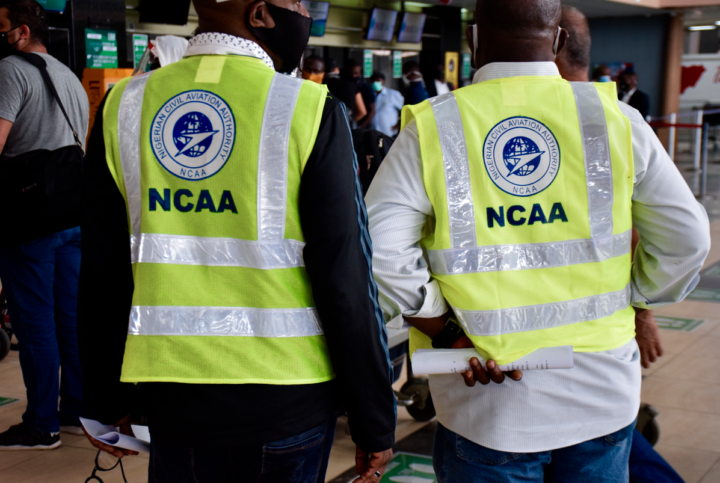
NAAPE cautioned that the NCAA is far more than an administrative agency issuing approvals and paperwork, it is Nigeria’s principal aviation safety regulator.
Its inspectors certify airlines before they commence operations, approve maintenance organisations, inspect aircraft, audit flight operations, approve maintenance programmes, evaluate Approved Training Organisations, oversee licensing systems, investigate safety concerns, certify aerodromes, oversee Air Navigation Service Providers, monitor Continuing Airworthiness Management Organisations and enforce compliance with the Nigerian Civil Aviation Regulations. In simple terms, the NCAA is the critical barrier between safe operations and unsafe ones.
“What makes the current proposal especially troubling is that the NCAA is already operating under severe financial pressure. This is not speculation. It is a reality that is well known throughout the aviation industry. The Authority is increasingly finding it difficult to adequately fund critical safety oversight activities. Important inspections and surveillance programmes have become constrained by limited resources. Inspectors are owed substantial Duty Tour Allowances arising from official oversight assignments. Various staff allowances have been reduced or discontinued, while months of legitimate entitlements remain outstanding because available funds are no longer sufficient to meet both operational requirements and personnel obligations.”
NAAPE also bemoaned the loss of human capital in the Authority, due to poor renumeration.
“The depth of this financial crisis becomes even clearer when one considers the Authority’s human capital. In the last five years alone, the NCAA has lost more than sixty inspectors and other highly specialised technical personnel through attrition, largely because of poor remuneration and more attractive opportunities elsewhere. Over many years, the Authority invested enormous public resources in training these professionals locally and internationally, only to lose them to foreign civil aviation authorities, airlines, maintenance organisations, aircraft manufacturers and consulting firms offering significantly better conditions of service. This continuing brain drain represents a serious erosion of institutional knowledge and technical capacity for a regulator whose effectiveness depends almost entirely on the competence and experience of its technical workforce.
“The burden placed on NCAA inspectors is exceptionally demanding. ICAO recognises that a Civil Aviation Inspector must possess qualifications comparable to those of the professionals and organisations being regulated. ICAO Document 9734, Safety Oversight Manual, Part A, paragraph 3.4.1.4 states that “the qualifications of a civil aviation inspector should ideally match the qualifications of those who are being inspected.” In practical terms, this means NCAA inspectors must continually update their knowledge and maintain competencies that enable them to effectively oversee airlines, maintenance organisations, Approved Training Organisations, Continuing Airworthiness Management Organisations, aerodromes, Air Navigation Service Providers and every other regulated entity. Maintaining this level of competence requires substantial and continuous investment in specialised training, recurrent qualification programmes and professional development.”, it noted.
The situation, NAAPE said is further aggravated by the automatic deduction of approximately thirty per cent of NCAA’s internally generated revenue at source, adding that the situation has deteriorated to the point where inspectors sometimes finance official inspections from their personal resources with the expectation of subsequent reimbursement.
It cautioned tbatt no effective safety oversight system can be sustained when regulatory inspections depend on the personal financial sacrifices of inspectors rather than institutional funding.
“These are not merely staff welfare issues. They are aviation safety issues. The financial pressure has become so severe that the NCAA itself has publicly expressed concern over the sustainability of its funding arrangements and questioned the continued deduction of revenues required for the discharge of its statutory responsibilities. Yet, at precisely the time when Government should be exploring ways to strengthen the Authority’s financial autonomy, improve inspector welfare, clear outstanding obligations and reinforce technical capacity, a proposal has emerged to reduce one of its principal statutory sources of funding even further.
“That is difficult to justify. The consequences of this proposal extend far beyond immediate operational funding. They threaten the human capital upon which every effective civil aviation regulator depends.”
ICAO fully recognises this reality
ICAO Document 9734, Safety Oversight Manual, Part A, paragraph 3.3.2.4 states that the cost of recruiting and retaining qualified technical personnel represents a significant financial commitment and may require revisions to long-standing remuneration policies. The same paragraph further emphasises that, in order to recruit and retain appropriately qualified personnel who combine professionalism and integrity, State authorities must become competitive employers.
That statement could not be more relevant to Nigeria today. Without competitive remuneration, experienced inspectors leave. Without experienced inspectors, effective oversight weakens.When oversight weakens, safety risks inevitably increase.
ICAO has consistently warned Member States about the dangers of underfunding their Civil Aviation Authorities. ICAO Document 9734, Part A, paragraph 2.3.1(c) identifies the continuous allocation of adequate financial and human resources as one of the defining characteristics of an effective and sustainable State Safety Oversight system. Paragraph 2.4.3 further observes that financial constraints facing Civil Aviation Authorities have become one of the principal reasons why many States fail to fully implement ICAO Standards and Recommended Practices. Paragraph 2.4.4 therefore emphasises that States must provide their safety oversight authorities with the human and financial resources necessary to effectively discharge their statutory responsibilities.
The issue goes beyond domestic aviation. Nigeria’s international aviation reputation is also at stake.
Nigeria recently achieved an impressive 91.4% Effective Implementation score during ICAO’s Universal Safety Oversight Audit Programme (USOAP). That achievement was not merely another performance statistic. It demonstrated to the international community that Nigeria possesses a credible and effective aviation safety oversight system. It strengthened confidence among foreign airlines, aircraft manufacturers, leasing companies, insurance organisations, financiers and international investors that Nigeria’s aviation sector is properly regulated in accordance with global standards.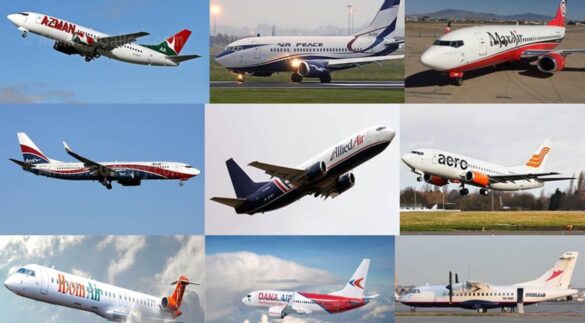
That confidence has measurable economic value. Countries with credible regulators attract greater investment..
Perhaps more importantly, ICAO does not merely assess technical regulations. It also assesses whether a regulator possesses the financial capacity to discharge its statutory responsibilities. Protocol Question PQ 2.051 specifically requires States to demonstrate that their Civil Aviation Authority has adequate financial resources to effectively perform its oversight functions. Nigeria successfully met this requirement during the recent audit despite the severe financial pressures already confronting the NCAA. It therefore defies logic that, having achieved one of Africa’s highest USOAP scores under already difficult financial circumstances, the country would now deliberately weaken the very institution that made that achievement possible.
If this proposal succeeds, Nigeria risks gradually eroding the financial autonomy that ICAO expects every effective Civil Aviation Authority to possess. Such a development could ultimately affect future ICAO assessments, weaken international confidence in Nigeria’s aviation oversight capability and undermine decades of painstaking institutional progress.
It must be also mentioned that Nigeria’s international standing, however, is not measured by ICAO alone. The United States Federal Aviation Administration (FAA), under its International Aviation Safety Assessment (IASA) Programme, independently evaluates whether a country’s Civil Aviation Authority is capable of providing effective safety oversight in accordance with ICAO Standards before that country can obtain or retain FAA Category 1 status. Contrary to popular belief, the FAA does not primarily audit individual airlines during this assessment. Its principal concern is whether the State, through its Civil Aviation Authority, possesses the legal framework, technical competence, organisational structure, qualified inspectors and financial resources necessary to effectively oversee its airlines and the entire civil aviation system. In Nigeria, that responsibility rests squarely on the NCAA.
This point is particularly significant at a time when Nigerian airlines, including Air Peace, are expanding their international operations to the United States. Continued operations and future expansion will inevitably require Nigeria to maintain the confidence of the FAA in the strength and effectiveness of the NCAA’s safety oversight system. It would therefore be both ironic and counterproductive for Nigeria to deliberately weaken the financial capacity of the very institution whose oversight capability forms the foundation of that international confidence. A weakened NCAA unnecessarily increases the risk of adverse observations during future FAA assessments, with potential consequences not only for the country’s international aviation reputation but also for the growth aspirations of Nigerian airlines.
Those supporting this bill must, therefore, appreciate the full implications of what they seek to achieve.
If a regulator is deliberately deprived of the financial resources required to perform effective safety oversight, any subsequent deterioration in oversight capability cannot honestly be described as unforeseen. The warning signs already exist. The consequences have been clearly identified. Responsibility would not rest solely with a financially constrained regulator struggling to perform its statutory duties. It would equally rest with those who knowingly enacted policies that weakened the regulator’s capacity to protect the travelling public.
For this reason, the national conversation must change. The issue is no longer whether the NCAA can somehow survive with less funding. The real question is whether Nigeria is prepared to weaken the institution principally responsible for protecting the safety of every person who flies within its airspace.
Our answer is unequivocal.
The NCAA should not lose even the smallest fraction of its present statutory allocation. On the contrary, the realities confronting the Authority today strongly suggest that Government should commence a review aimed at strengthening, rather than diminishing, the financial sustainability of Nigeria’s aviation regulator. Considering the expanding scope of NCAA’s oversight responsibilities, the increasing cost of maintaining technical competence, inflationary pressures, persistent airline indebtedness and the growing complexity of modern aviation regulation, there is a compelling case for reviewing the Authority’s allocation upward from the present 56% to approximately 65%. Such a review would be far more consistent with Nigeria’s international obligations and with the actual cost of maintaining an effective State Safety Oversight system.
At the same time, Government should address the real source of the financial pressure affecting all beneficiary agencies by aggressively recovering outstanding Ticket Sales Charge indebtedness from airlines and strengthening enforcement mechanisms to ensure prompt remittance going forward. That approach would strengthen the finances of every beneficiary agency without undermining the independence of Nigeria’s safety regulator.
The solution to the financial challenges facing Nigeria’s aviation industry is not to cripple the regulator. It is to strengthen the regulator, recover outstanding statutory revenues, modernise the financing of aviation service providers and preserve the financial autonomy that ICAO regards as indispensable for effective safety oversight. A nation that weakens its safety regulator weakens the safety of its skies.