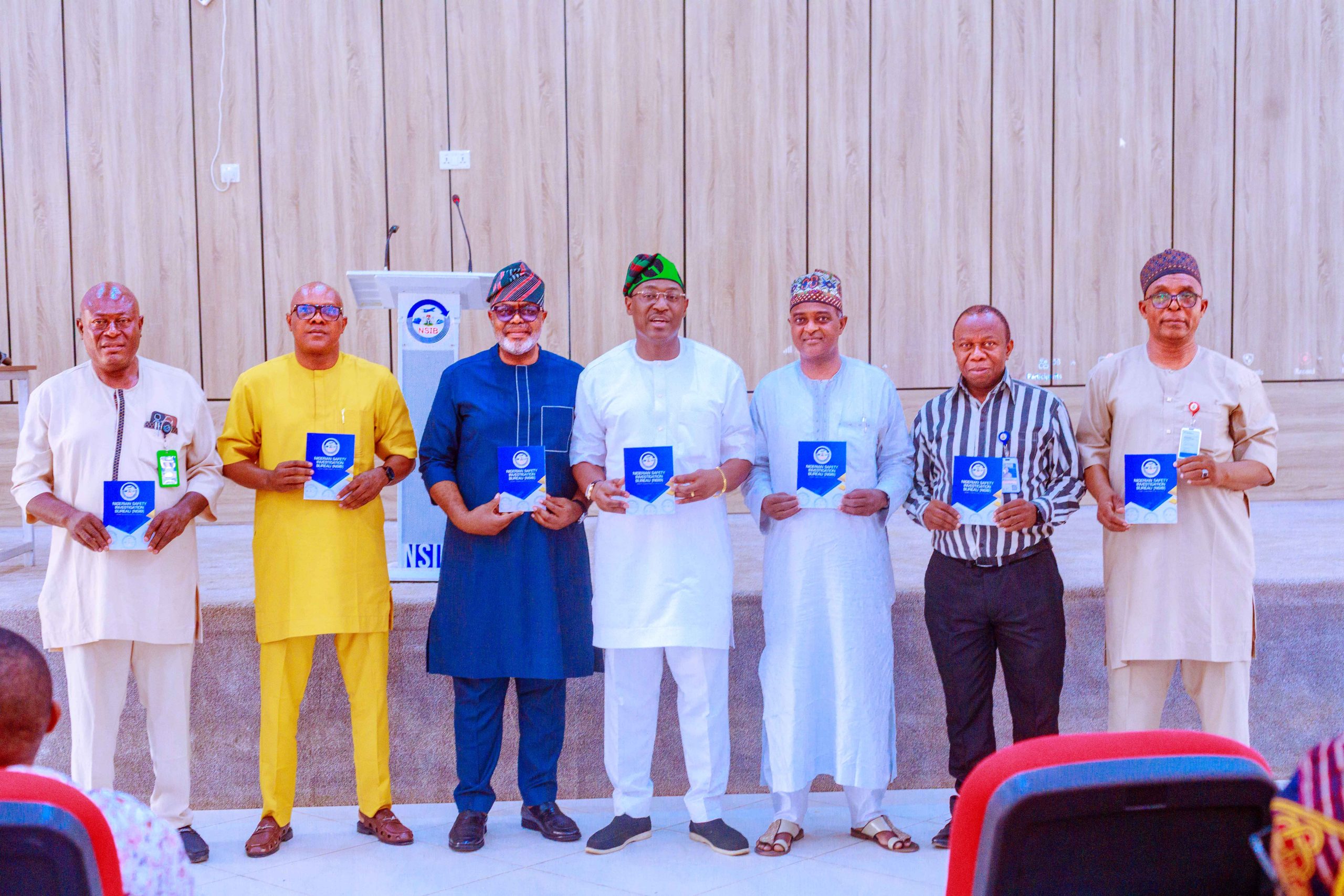
Nigeria’s safety investigation landscape has entered a new era of institutional autonomy and workforce stability, signalled by a landmark “collective covenant” designed to bridge the gap between local administrative standards and global investigative excellence.
The approval of the conditions of service by the Office of the Head of the Civil Service of the Federation comes at a critical juncture. Following a strategic restructuring under the “Renewed Hope” agenda of President Bola Ahmed Tinubu, the NSIB now reports directly to the Presidency.
This shift in the reporting line is more than a change in the organisational chart; it provides the Bureau with the necessary independence and authority to function as the nation’s sole multimodal accident investigation agency without the encumbrances of traditional ministerial bureaucracy.
The newly approved CoS marks a decisive pivot for the Bureau as it consolidates its mandate to conduct multimodal transport investigations across the nation’s aviation, marine, rail, and road networks.
By moving away from rigid civil service bureaucracy, the independent agency is embedding a culture of measurable productivity, psychological welfare, and continuous professional growth.Central to this reform is the retirement of the antiquated Annual Performance Evaluation Report (APER) system in favour of a data-driven Performance Management System (PMS).
This shift ensures that employee appraisals are now tethered to specific competencies and mutually agreed Key Performance Indicators (KPIs) tracked rigorously throughout the calendar year. By linking performance results directly to rewards, sanctions, and career development, the NSIB is fostering a merit-based ecosystem critical for an agency where analytical precision is non-negotiable.
Crucially, the NSIB has taken an unprecedented step in Nigerian public sector administration by acknowledging the severe psychological toll of accident investigation. The new framework introduces formal “Trauma Risk Management” to provide vital post-traumatic care for its frontline personnel.
Investigators subjected to harrowing field conditions and high-stress environments are now entitled to designated “Mental-Day off” periods, ensuring their cognitive readiness and overall well-being are never compromised.
“This milestone represents a transformative commitment to elevating our organisation’s foundation,” stated Captain Alex Badeh Jr., Director General and CEO of the NSIB, while addressing journalists at the unveiling ceremony.
“It sets forth essential policies and standards governing employment, career advancement, and ethical conduct, ensuring equity while fostering an environment where productivity thrives, accountability is resolute, and institutional excellence becomes the norm. It is my fervent aspiration that these Conditions of Service will propel the Bureau forward, empowering our team to execute their vital roles with unparalleled professionalism, passion, and resolve.”, he added.
Furthermore, the Bureau has institutionalised a heavy investment in human capital. The CoS guarantees pathways for specialised training and sponsorships for professional qualifications.
By recognising and supporting staff memberships in elite global bodies, ranging from the Council for the Regulation of Engineering in Nigeria (COREN) to the International Federation of Airline Pilots’ Association (IFALPA), the NSIB is ensuring that its investigators speak the same technical language as their international counterparts at the NTSB in the United States or the AAIB in the United Kingdom.Investigative work is inherently gruelling, often requiring personnel to spend weeks at accident sites dealing with wreckage and trauma.
In a progressive move for a Nigerian federal agency, the new CoS formally introduces “Trauma Risk Management.” This includes dedicated medical and psychological support for frontline staff, alongside “Mental-Day off” provisions to ensure that those tasked with identifying systemic risks are themselves operating at peak cognitive health.
The welfare package also extends to more traditional but equally vital benefits, including comprehensive medical services for staff and their families, a crèche for nursing mothers, and an onsite staff club to foster a culture of mutual respect and social cohesion.The broader implications of these reforms extend far beyond the Bureau’s walls.
By creating a motivated, independent, and highly professional investigative body, Nigeria is sending a clear signal to the international community and private investors: the nation’s transport corridors are being monitored by a world-class safety watchdog.
The Federal Government’s decision to reposition the NSIB as a multimodal agency reporting to the Presidency underscores a commitment to safety as a pillar of economic stability. When accidents are investigated with transparency and scientific rigour, rather than a focus on blame, it leads to systemic improvements that prevent future tragedies and protect the national economy.
As Captain Badeh Jr. concluded, the new CoS is the “cornerstone” upon which a more efficient NSIB will be built.
“I urge every staff member to embrace it as the guarantee that hard work, integrity, and dedication will be acknowledged and rewarded. Let it propel us to even greater achievements in service to our beloved nation.”
With this framework now in effect, the NSIB moves closer to its goal of being a global leader in accident investigation, ensuring that for every incident on Nigeria’s roads, rails, or waters, the lessons learned today become the safety standards of tomorrow.