


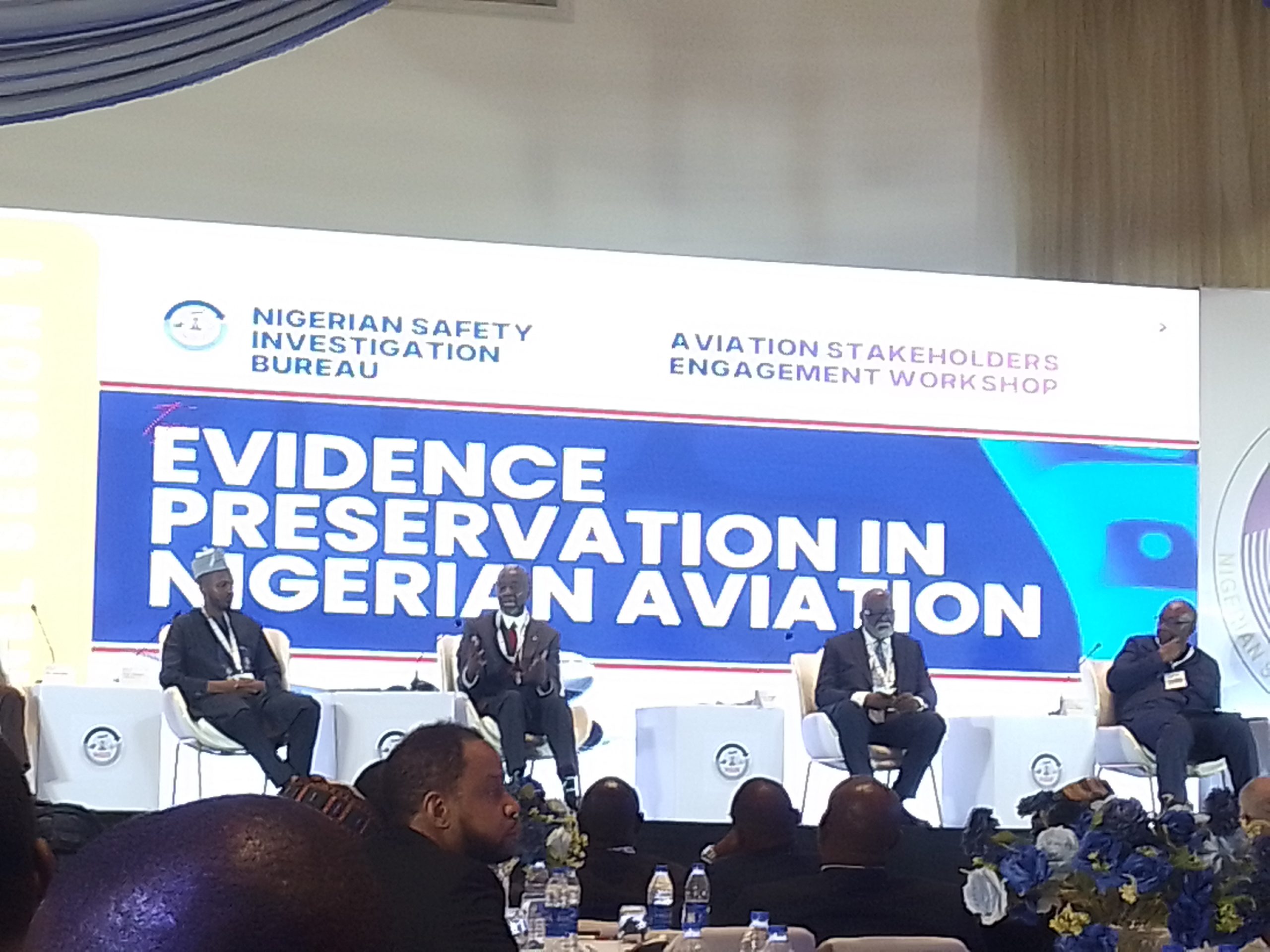
Capt. Alex Badeh (Jr), Director General/CEO, Nigerian Safety Investigation Bureau (NSIB) has expressed worry over the doctoring of Cockpit Voice Recorder (CVR) by airlines after incidents and accidents, saying such in turn, distorts investigation and evidence.
The Nigeria Civil Aviation Authority (NCAA) has also warned domestic airlines against overwriting the CVR after serious incidents and accidents.
A CVR is a device used to record the audio environment in the flight deck for accidents and incident investigation purposes.
Speaking on Wednesday during the opening ceremony of Aviation Stakeholder Engagement Workshop organised by the NSIB in Lagos, he urged airlines to henceforth ,adhere to the Nig-CARs Part 7.8.1.3(b) – Operation of Flight Recorders: which says: “To preserve flight recorder records, flight recorders shall be deactivated upon completion of flight time following an accident or incident.” for accurate investigation.
The theme for the conference was ‘Preservation of accident investigation evidence and substance use among aviation personnel ‘.
“Our deliberations today centre on two fundamental pillars that are essential to safe and reliable air travel: the preservation of accident investigation evidence and substance use among aviation personnel.
” First, let us speak about the preservation of critical evidence — particularly Cockpit Voice Recorders (CVRs) and Flight Data Recorders (FDRs). These devices are the objective record of events in flight. We have all seen, in past incidents, how the untimely overwriting of these invaluable “black boxes” can limit our ability to uncover root causes, learn the right lessons, and prevent recurrence.
” As clearly stated in Nig-CARs Part 7.8.1.3(b) – Operation of Flight Recorders: “To preserve flight recorder records, flight recorders shall be deactivated upon completion of flight time following an accident or incident.” These rules are explicit: evidence must be secured immediately after any accident or incident. By consistently adhering to these protocols across the industry, you strengthen our collective capacity to conduct thorough and accurate investigations that ultimately protect lives and build public trust.”, he said.
Speaking on behalf of the Director General, Capt. Chris Najomo. Engr. Ifeanyi Iteke from the Directorate of Airworthiness, said ” thee were always the issue of overwriting of CVR and tampering with evidence. It is in the regulations that the airlines should be reminded of the need to preserve evidence where there’s an occurrence, we have been doing this abd the operators need to remind their employees of the need to do this”.
“Despite the established regulatory framework, the Authority went further to develop and issue to the industry two All Operator’s Letter (AOL) on the overwriting of the CVR, detailing procedures that operators should incorporate into their manuals and bring to the notice of their flight crews to ensure compliance with the regulatory requirements.
“Presently, the Authority is conducting an enforcement investigation on a particular occurrence, where the CVR was overwritten. This enforcement action when concluded and where if the crew members are found culpable will serve as a deterrent, not only to the subject crew members, but to all others similarly situated. “, he said.
Speaking on the issue of substance use among aviation personnel, Badeh Jnr said it remains a matter of serious concern that demands collective vigilance and zero tolerance.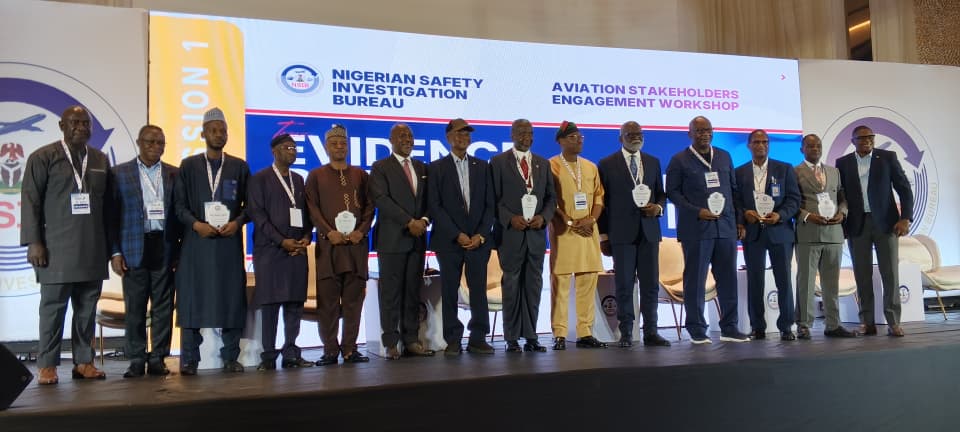
According to him, the Pilot-in-Command bears particular accountability for ensuring that no flight crew member is incapacitated by alcohol, drugs, fatigue, or other causes before commencing a flight.
“Impairment — whether from alcohol, psychoactive substances, or other factors — can profoundly affect judgment, reaction times, and overall flight safety. The NCAA regulations, particularly Nig-CARs Part 8.5.1.5, are unambiguous: No person may act or attempt to act as a crew member of a civil aircraft if they: Have consumed any alcoholic beverage within 8 hours before acting as crew (the “bottle-to-throttle” rule); Are under the influence of alcohol; or Are using any psychoactive substance that affects their faculties in any way contrary to safety.
” This applies to pilots and all other required flight crew members. While it is a shared responsibility, the Pilot-in-Command bears particular accountability for ensuring that no flight crew member is incapacitated by alcohol, drugs, fatigue, or other causes before commencing a flight. These requirements are fully aligned with ICAO standards, including Doc 9654 — the Manual on Prevention of Problematic Use of Substances in the Aviation Workplace — and set strict abstinence rules, rigorous testing protocols, and clear consequences for violations. Recent events have reminded us how important it is to internalise these policies not merely as regulatory requirements, but as genuine safeguards for passengers, colleagues, and everyone who places their trust in our aviation system.”, he added.
Badeh, who noted that the workshop is a direct response to these challenges and to the evolving safety landscape, added that the deliberations build upon previous safety recommendations and directives from the Federal Ministry of Aviation and Aerospace Development.
” By coming together — regulators, investigators,operators, unions, and partners, we all have the opportunity to share best practices openly, confront challenges candidly, and forge practical, actionable commitments that will strengthen compliance, enhance reporting mechanisms, and foster a stronger culture of proactive safety.
He pledged the Bureau’s commitment to partnering with stakeholders through training, guidance, resources, sustained collaboration, and advocacy, saying, ‘together, we will uphold the integrity of investigation evidence, eliminate impairment risks, and ensure safer, clearer skies for Nigeria.’


