Engr. Umar Farouk, MD, NAMA
The Nigerian Airspace Management Agency (NAMA) has asked the National Assembly to approve a 56 per cent allocation to it from the existing five per cent pool of ticket sales charge and harmonise the affected enactments.
It is also seeking a 90 percent share of Aviation Height clearance while proposing that 10 percent be allocated to the Nigeria Civil Aviation Authority (NCAA).
Managing Director of NAMA, Engr. Umar Farouk made these proposals while making a presentation at a public hearing on the sharing formula of TSC and other aviation fees before members of the National Assembly in Abuja on Thursday.
The NAMA boss said his submission was not to demean importance of other agencies but to ask that the law also recognise, in a practical and sustainable way, the scale of the responsibility placed upon NAMA, as the current allocation can no longer sustain the agency.
“Every day, long before a passenger boards an aircraft, NAMA’s personnel and systems are already at work. A flight plan must be processed. Aeronautical information must be current. Radios must be clear. Navigation aids must be serviceable. Surveillance must be available. Controllers must be at their positions. Engineers must be ready to respond. Power and backup power must hold. When the aircraft takes off, all these elements must come together, not later that day, not after a supplementary release, but at that very moment.
“That is the nature of air navigation services. They are continuous, technology-intensive and unforgiving of delay. A broken office printer can wait until morning. A degraded safety-critical communication link cannot. A postponed meeting may be inconvenient. Deferred radar support, navigation-aid calibration or controller training can reduce the resilience of the national system.
“Today NAMA receives 22 per cent of the five per cent statutory pool. Let us translate that figure into ordinary terms. On every ₦1,000 of qualifying ticket, charter or cargo sales, the five per cent charge produces ₦50. NAMA receives ₦11 from that ₦50. Our effective share is therefore 1.10 per cent of the underlying sale. If this number is changed to 56 per cent, NAMA would receive ₦28 from the same ₦50. The five per cent charge itself would not increase. The passenger would not be asked to pay a sixth per cent. The amendment would simply direct a fairer share of the existing pool to the infrastructure that guides the aircraft. Why is that necessary? Because the cost of keeping Nigerian airspace safe has outgrown a formula that does not adequately reflect NAMA’s statutory burden.”, he said.
According to him, publicly reported figures for 2023 showed approximately ₦21 billion in personnel expenditure for NAMA, more than ₦12 billion in capital expenditure and more than ₦10 billion in overheads, a total cost profile exceeding ₦43 billion.
He added that behind these expenses are controllers, engineers, communication systems, navigation aids, surveillance platforms, power systems, spares, software, calibration, training and facilities spread across our country.
“At the same time, a navigation charge as low as ₦11,000 per flight had remained unchanged since June 2008. Consider what has happened to the cost of fuel, electricity, foreign exchange, imported components, software licences and specialist training since 2008. The service has had to absorb today’s costs with yesterday’s tariff base. The dedication of our workforce has helped bridge that gap, but dedication is not a substitute for a sustainable funding system.
“Our surveillance infrastructure also illustrates the urgency. The Total Radar Coverage of Nigeria system has served the country over many years. Its sites and components now require a deliberate renewal and transition programme. As equipment ages, spare parts become harder to obtain and manufacturer support changes. Responsible management does not wait for obsolescence to become failure. It plans replacement, builds redundancy, trains the people who will operate the new system and keeps the old and new services safely coordinated during transition.
“In the same vein, NCAA regulates and issues Aviation Height Clearance Certificate and applicants pay fees for that certification. Yet the aeronautical question is operational: will a proposed mast, tower, crane or high-rise building interfere with a flight procedure, minimum altitude, navigation aid, surveillance system or protected airspace? NAMA performs this safety-critical technical work but receives no dedicated payment for the service.”, he added.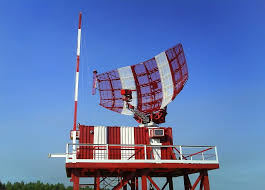
Farouk argued that NAMA has a department that conducts survey and obstacle assessment and maintains specialised in-house capability in WGS-84 aerodrome and obstacle surveying., adding that as Nigeria’s sole Air Navigation Service Provider, NAMA is the only federal aviation agency that connects WGS-84 survey data, obstacle analysis, aeronautical information, procedure design and the operational management of airspace in one technical chain.
The NAMA boss therefore asks that for a fair and transparent arrangement, NCAA should retain the regulatory component of the Aviation Height Clearance while NAMA be paid obstacle registration, identified technical-services component for WGS-84 survey validation, obstacle assessment, procedure-impact analysis and field work and such fee by should be remitted directly to NAMA.
“In accordance with ICAO’s cost-recovery model, the revenue is to maintain the equipment, data, software and trained professionals that make the clearance technically meaningful. We are therefore recommending a sharing formula of 90% to 10% in favour of NAMA.”
Farouk, who further noted that a properly funded NAMA will produce benefits far beyond the Agency, saud a reliable communication and surveillance permit efficient separation as modern procedures can shorten routes and approaches.
“An aircraft that moves safely and efficiently through Nigerian airspace is an economic activity enabled by invisible infrastructure. NAMA is not asking the National Assembly for a blank cheque. NAMA supports accountability equal to the responsibility we seek. It supports automated collection and remittance, quarterly disclosure of receipts and projects, annual independent audit, transparent procurement and measurable performance indicators. We are prepared to report what was received, what it purchased, which milestone was achieved and what improvement the user obtained.
“NAMA also asks that the statutes be harmonised. The Civil Aviation Act presently states 22 per cent for NAMA, while the NAMA Act refers to 23 per cent in its Fund provisions. The law should speak with one voice. The beneficiaries should be named correctly; the percentages should total 100 per cent; collection and remittance responsibilities should be unambiguous; and the effective date should be clear.
“On behalf of the Management and staff of the Nigerian Airspace Management Agency, I respectfully pray the National Assembly to approve a 56 per cent allocation to NAMA from the existing five per cent pool; harmonise the affected enactments; recognise obstacle assessment and WGS-84 aeronautical survey as chargeable NAMA technical services; establish transparent, automated remittance; and pair the enhanced allocation with firm accountability and oversight.
“Give Nigerian airspace the resilience it requires and require us to demonstrate that resilience. In doing so, this National Assembly will not simply amend a percentage. It will strengthen the safety, efficiency, sovereignty and future competitiveness of our nation’s airspace.”, Farouk added.